Bintuni Industrial Estate Development Delayed by Tangguh Gas Supply


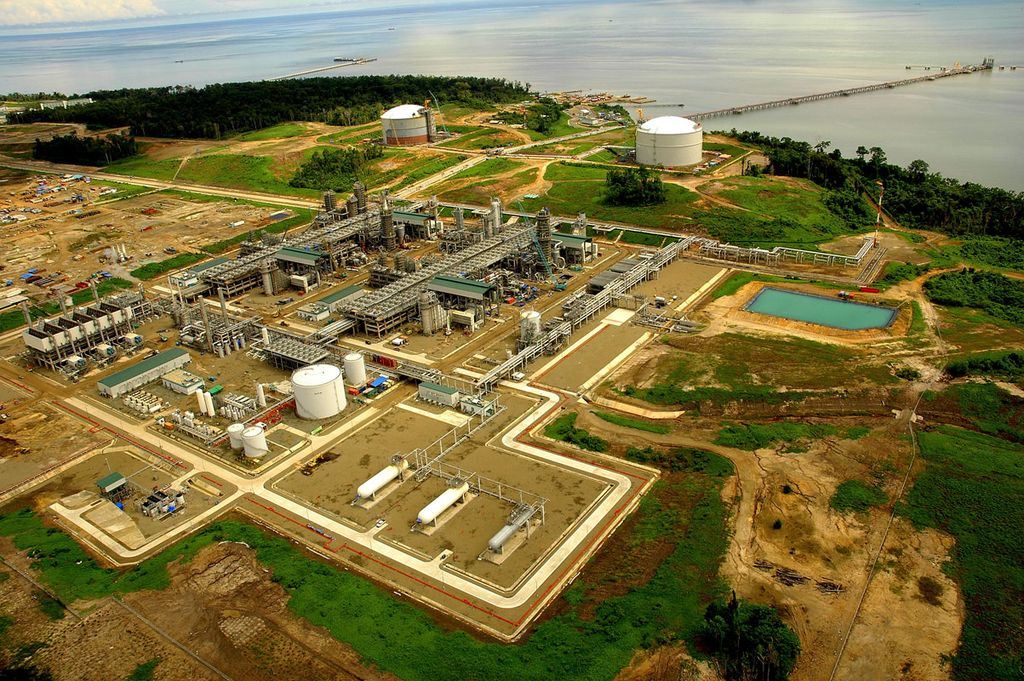
KATADATA - The development of an industrial estate in Bintuni Bay, Papua, could be the answer to the problem of the Tangguh Refinery project. But delays threaten the development due to uncertainty over gas supplies for the estate.
The Industry Ministry’s Director for Basic Chemical Affairs, Muhammad Khayam, said the ministry is still waiting for the gas price calculation from Tangguh Refinery’s operator, BP Berau. Currently, BP Berau is processing the certification of gas reserves, which should be completed by April. Afterwards, BP Berau will name its price for industrial gas supply.
Price certainty is important because a petrochemical industry to be developed in the industrial estate will require massive volumes of gas. Some of the gas from Tangguh Refinery is earmarked for the fertiliser industry, but a price deal has yet to be sealed.
Only when the gas price is finalised can the petrochemical industry move into the estate and calculate its investments. Meanwhile, there is nothing the industry can do to speed up its development.
Khayam also mentioned that the government could intervene in the pricing of the industrial gas supply to achieve the lowest possible price for the development, given that global gas prices are still relatively low. He also said that the proposal to supply gas for this industrial estate must be finalised as soon as possible because the development of Train 3 Tangguh Refinery will soon get underway. (Read more: SKK Migas Aims to Secure Buyer Commitment for Tangguh Gas Next Month)
The industrial development in Bintuni Bay is the perfect opportunity to use up huge amounts of gas from Tangguh Refinery, especially since the contractor, BP, was known to have a ‘buyer commitment’ problem. This project would solve Tangguh’s problem in an instant. (Read more: Train 3 Tangguh Project is hampered by Long-Term Contract Problem)
For the first phase of the estate’s development, the fertilizer factory would require 180 million cubic feet of gas per day (mmscfd). And for the second phase, the petrochemical industry would need 200 mmscfd. Fortunately, the daily gas production from Tangguh Refinery is at 600 mmscfd. This means that 63 percent of the daily gas production can be absorbed by Bintuni Bay Industrial Estate, which is way beyond the government target to allocate 40 percent of production for domestic needs.
Dapatkan pengalaman membaca lebih nyaman dan nikmati fitur menarik lainnya lewat aplikasi mobile Katadata.