Measuring the Danger of Indonesia’s Debt


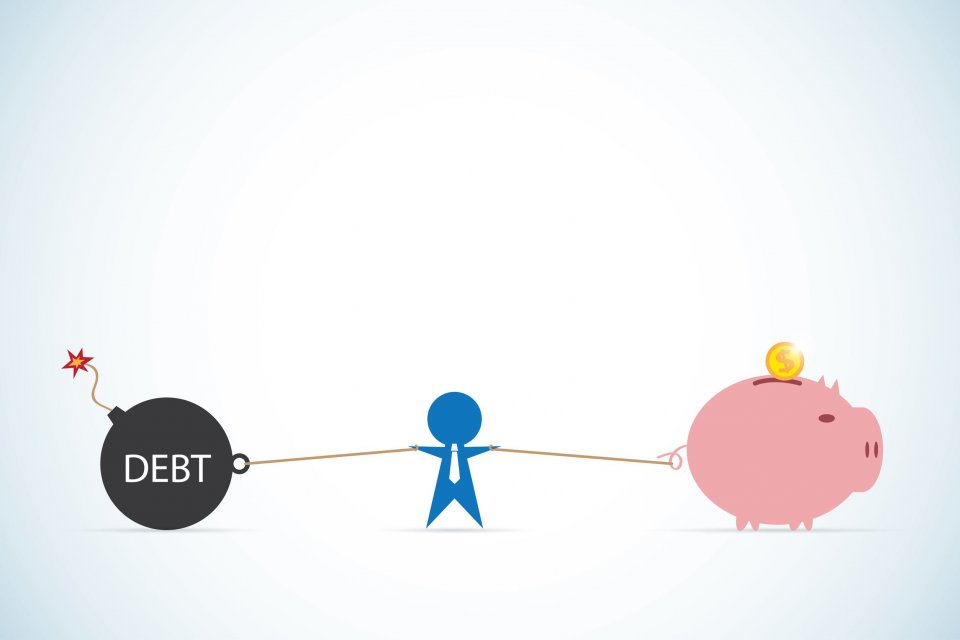
So far, debt is used for operational cost of bureaucracy. The increase in capital spending related to infrastructure development is actually lower than debt payments, goods spending, and personnel spending. This spending posture will harm the state finances if it continues to be ignored. “Spending from debt should be directed as effectively as possible for development rather than being included in the consumptive spending post,” Bhima said during a discussion event entitled “Indonesian Economy after the 2019 Presidential Election” in Jakarta, Monday (1/28).
Infrastructure development does not only rely on the state budget, but also on assignments to State-Owned Enterprises (SOE). The government only provides a small amount of capital and SOEs fulfil the rest themselves. They are forced to make debts to carry out assignments from the government. As a result, the debt of state companies in non-financial sector rose 60 percent to Rp 805 trillion in 2014-2018.
The problem is that their debt is mostly in foreign currencies. Meanwhile, many SOEs do not earn income in foreign currencies. The government needs to increase awareness if problems with debt arise at any time soon. Currently, some state companies have experienced financial difficulties, especially those in the construction sector. In the short and medium term, debt interest payments also indirectly burden Indonesia’s balance of payments.
High Debt Cost
Indonesia’s debt history has been around for a long time, but the cost was not overly high as it is today. During the Soeharto era, the portion of debt was dominated by bilateral and multilateral loans. The debt payment was carried out in the long term, so it did not burden the state.
In this era, the government relies more on government securities (SBN). Until the end of 2018, the realization of all government debts reached Rp 4,418.3 trillion. In detail, it came from the SBN issuance of Rp 3,612.69 trillion and loans of Rp 805.62 trillion.
“The government is very diligent in issuing securities, which must automatically be paid at an interest of 8 percent, the highest in Asia. Compared to other Asian countries, we are the highest. This isn’t good,” Bhima said. Based on data from Asian Bonds Online, Indonesia's debt interest rate is 8.12 percent. Meanwhile, the Philippines only has debt interest of 6.47 percent, Vietnam 4.88 percent, Malaysia 4.07 percent, Thailand 2.27 percent, and Singapore 2.21 percent. This high interest increases the payment burden.
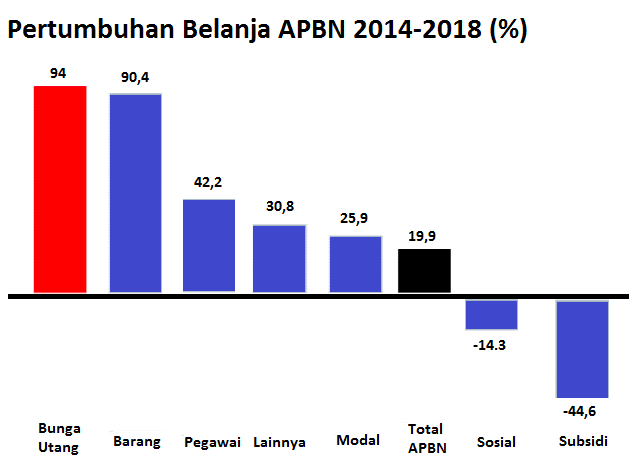
As a result of the high cost, state budget is mostly allocated for debt payments. In 2014-2018, spending for debt payments increased almost twice even though total state spending only rose by 20 percent. This is why the allocation of social spending was reduced.
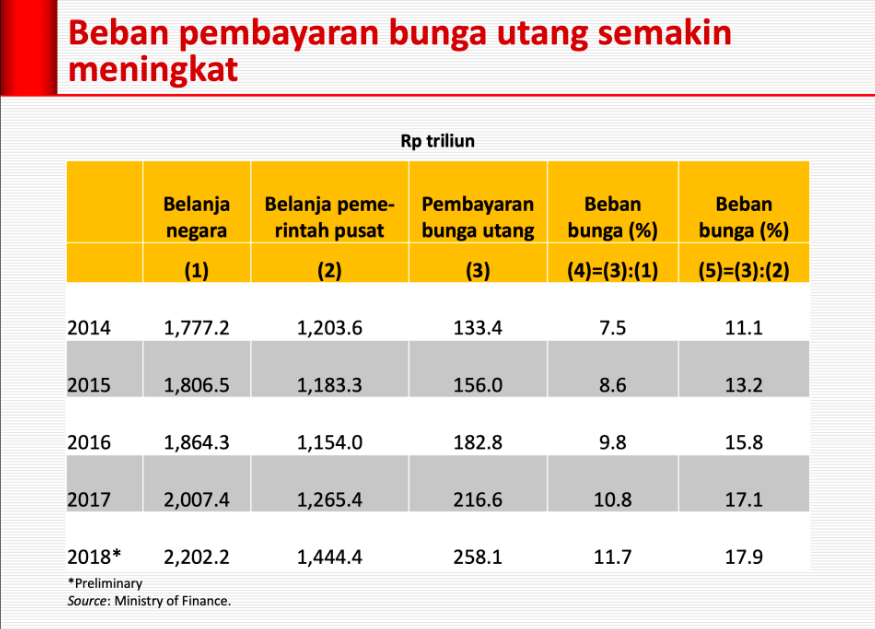
For this matter, Faisal compared Indonesia with the US, whose debt ratio is 105 percent of GDP. However, the US only allocates seven percent of its budget to pay debts. It is mostly used for social spending, which is directly accepted by its citizens, including in the form of health and social protection.
Economic Coordinating Minister Darmin Nasution admitted Indonesia’s debt interest is higher than its neighbouring countries and others. This happens because of certain factors. “The way to calculate bonds [interest rates] in each country is not the same,” he said. Darmin ensured Indonesia’s high interest rate is not alarming because this country is able to finance it. Moreover, its GDP value is also still high.
The increase in debt interest is in line with the rising trend of global benchmark interest rate. Bank Indonesia (BI) has responded by raising its seven-day reverse repo rate six times in 2018. Conversely, the debt interest expense in 2014 was low due to the trend of world monetary easing at the time. BI also lowered the interest rate.
Solution to Reduce Debt
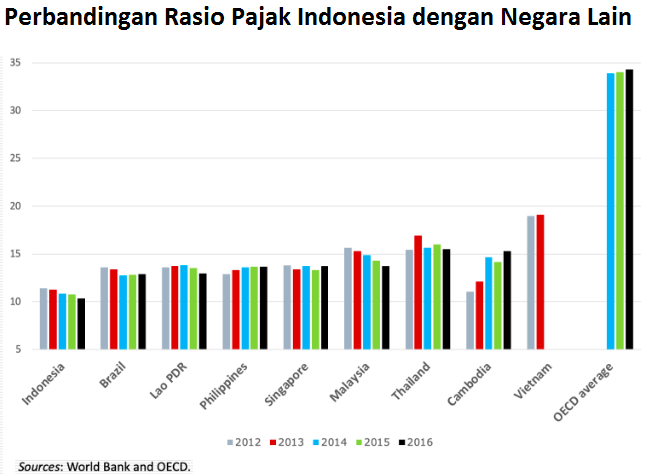
According to Faisal, the increase in government debt can be reduced if the government can improve its ability to collect tax revenue. So far, the tax-to-GDP ratio tends to slow down. After falling for the fourth year in a row, there was an increase last year. “Compared to neighbouring countries, our tax ratio is really very low,” he said.
In addition to increasing the tax ratio, former Economic Coordinating Minister Rizal Ramli suggested a number of steps that could be taken, including rising the number of infrastructure projects that use public-private partnership (PPP) scheme. Thus, the government no longer needs to waste a lot of funds and assign SOEs to build infrastructure. Meanwhile, Bhima advised the government to reduce the portion of debt in the form of securities, especially those denominated in foreign currencies.
Dapatkan pengalaman membaca lebih nyaman dan nikmati fitur menarik lainnya lewat aplikasi mobile Katadata.